

This page is dedicated to my mother,
who instilled in me the value of real butter.
I'm a big fan of butter. There's nothing
like it. After all, it is at least 80% fat, so you know it's got
to be good. And there's no substitute for butter in chocolate
chip cookies.

There's been a lot of press
about how bad butter is for you, but some studies show that margarine
is just as bad or even worse. Recent research is finding out
more about "trans-fatty acids," which are produced
during the partial hydrogenation of vegetable oils (i.e. when
margarine is made). Trans-fatty acids are just as bad or even
worse than saturated fats because of the way they increase bad
cholesterol and decrease good cholesterol. Of course, the best
health tip is to cut down on both butter and margarine and use
olive oil instead.
Despite health concerns, both butter
and margarine have a long and interesting history. There's evidence
that recipes from as far back as the 13th century called for butter.
Margarine didn't come on the scene until much later, in the late
1800s. The dairy industry didn't take kindly to the intrusion
and made all sorts of attempts to block the sale of margarine.
One tactic was to ban the sale of colored margarine (white margarine
was ok); manufacturers got around this by including capsules of
food coloring with margarine so consumers could add the yellow
color at home.
For more about the history of margarine,
check out the National
Association of Margarine Manufacturers' web site.
While I was looking for butter information,
I came across a very elegant website titled Butter:
The Natural Choice. Sponsored by the American Dairy Association
and the American Butter Institute, it extolls the virtues of butter
while dispensing advice on how to store and cook with butter.
They even have FAQs such as this:
Q: What happens if I accidentally
melt butter that I was softening for baking?
A: First, the best way to thaw
or soften butter is to transfer it from the freezer to the refrigerator,
or remove it from the refrigerator to let it soften at room temperature.
But if you put it in the microwave for a few seconds to soften
and it overmelts, use it for something else such as flavoring
vegetables, as a dip, or try whipping it once it re-solidifies
to use as a table spread, then refrigerate it immediately and
use promptly. Make sure to soften a fresh stick of butter for
baking to achieve the right texture. Also, the site listed the all-important
butter equivalents:
2 cups = 4 sticks = 1 pound Never know when the need for that bit
of info is going to pop up.
What page on butter would be complete
without a shortbread recipe?
Here are a couple to choose from:
Cooking.com's shortbread recipe Bon Appetit's simple shortbread recipe Joy of Baking's shortbread recipe Created by Amy on March 4, 2000.
1 cup = 2 sticks = 1/2 pound
1/2 cup = 1 stick = 1/4 pound
1/4 cup = 1/2 stick = 4 tablespoons

Another fascinating component
of butter culture is specialty butters. Not only can you get
all kinds of flavored butters, but apparently you can get all
kinds of shapes. Keller's Speciality
Butters sells butter pats in various shapes like swans and
shells (my favorite).

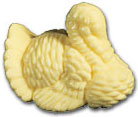
And for extra-fancy occasions,
they sell butter sculptures in various holiday themes. Bet this
would be a hit at your next Thanksgiving Day dinner.